 Eric Middleton
The cheapest tokens are the ones you never had to use
What I love about AI transformation right now is that everyone is sharing lessons learned - not just the wins, and lately it’s all about the eye...
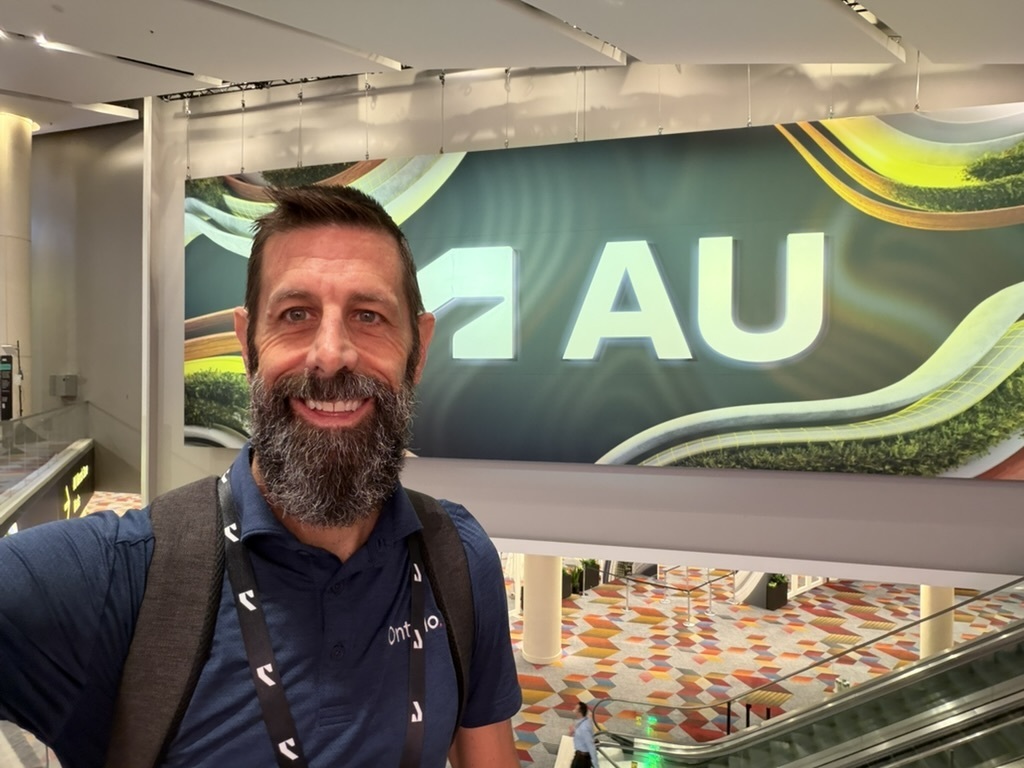
I've walked the halls of the Venetian in Las Vegas more times than I can count, mostly for cybersecurity conferences, so I arrived at AU 2026 last week expecting familiar territory. Autodesk made it feel new. The mobile app was excellent, the floor was easy to get around, and the whole event was built for the thing that actually matters at a conference: sitting down with someone and having a real conversation.
I had plenty of those. Here's what stuck with me.
The Day 1 keynote opened with Autodesk Context, which the company describes as a connected brain at the center of a project. It maps how information, people, decisions and activities relate, and it captures why a decision was made and what the situation looked like when someone made it. Later in the week, Mike Haley, who leads AI and research at Autodesk, summed up the strategy in one idea: AI is only as good as the context it's grounded in.
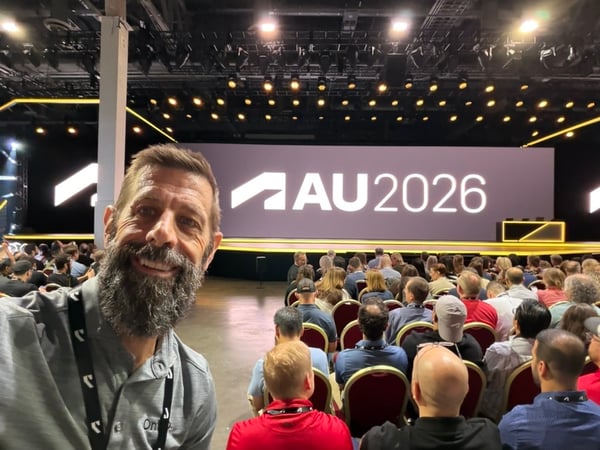
I found myself nodding through that whole keynote. It's the right message for the right audience. Construction professionals have heard plenty about chatbots, and it was refreshing to hear the biggest company in the room say the model isn't the hard part. The hard part is giving AI something true to reason over.
My only reaction was that it's still too small. Autodesk Context is built around a project, or a portfolio of projects. That makes sense for a company whose tools create the design data. But a project ends, and the business that delivered it keeps running. The asset you built operates for decades. The contractor moves its crews, equipment and suppliers to the next job and the one after that. If the context layer stops at the project boundary, it only ever sees one slice of the business at a time.
The real prize is a single view of the entire operation. So thank you, Autodesk, for putting this on the main stage. Now let’s go big.
It was obvious at AU how much of the real context lives outside design software. Operational systems grew up one problem at a time: scheduling here, maintenance there, then telematics, safety and fleet. Each one works on its own. Few of them connect in any meaningful way to ERP, workforce management, or each other. And the most important context of all isn't in a system. It's in people's heads.
One conversation drove that home. The CEO of a workforce planning company told the room that 40% of construction professionals plan to retire in the next five years. Think about what walks out the door with them. Decades of unwritten institutional knowledge. Supplier relationships built over years of phone calls. The intuition that tells a superintendent a job is about to go sideways before the schedule shows it. Localized safety expertise that exists nowhere in writing.
You can't replace that with a chatbot. You can start capturing it, and that's why building an ontology has become critical: a model of how your assets, people, systems and decisions relate, so knowledge has somewhere to live besides one person's memory. Oleg Shilovitsky, who writes about engineering software and was covering AU, put it well: “Every application will have an assistant. That is not the same as shared understanding.”
The encouraging part is how easy it has become to start. One of the panels made a point I agree with completely: every company needs a playground, a place to try things, fail fast and learn. The cost of an experiment has collapsed. Pick one operation and one nagging problem, connect the handful of systems and people involved, and see what you learn in 30 days. The companies waiting for certainty will get around to it after their best people have already retired.
I spent a big part of my career in cybersecurity, and AU gave me déjà vu. For about a decade that industry sold dashboards, each with prettier charts, faster queries and more integrations. And breach after breach, the post-mortem read the same way. The alert fired. Somebody saw it. Nobody understood what it meant, because the log had no idea what that server did, who owned it, or whether that behavior was normal for that company.
The tool was never the bottleneck. The context was. Security tools only started earning their keep when we got serious about connecting and enriching the data so it reflected how the business actually worked.
Construction and heavy industry are running the same play now, with AI assistants standing in for the dashboards. I'd love to see us skip the decade of learning it the hard way.
AU 2027 is already set for Las Vegas, September 14 to 16. My prediction is the conversation moves from designing and building toward operating, and the context layer goes from an architecture discussion to a line item in your budget.
As you continue to evaluate leading AI technology vendors, ask these four questions:
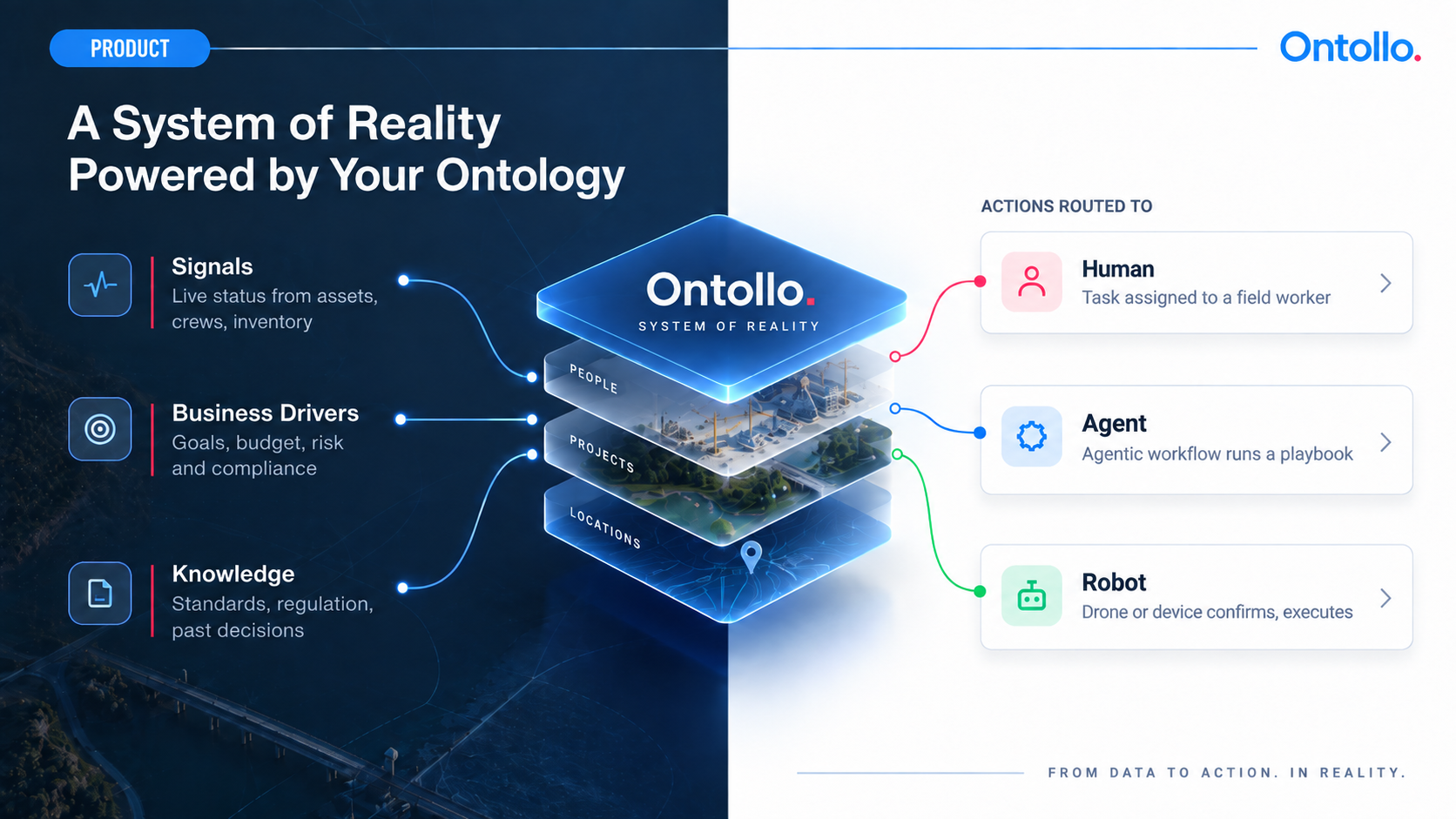
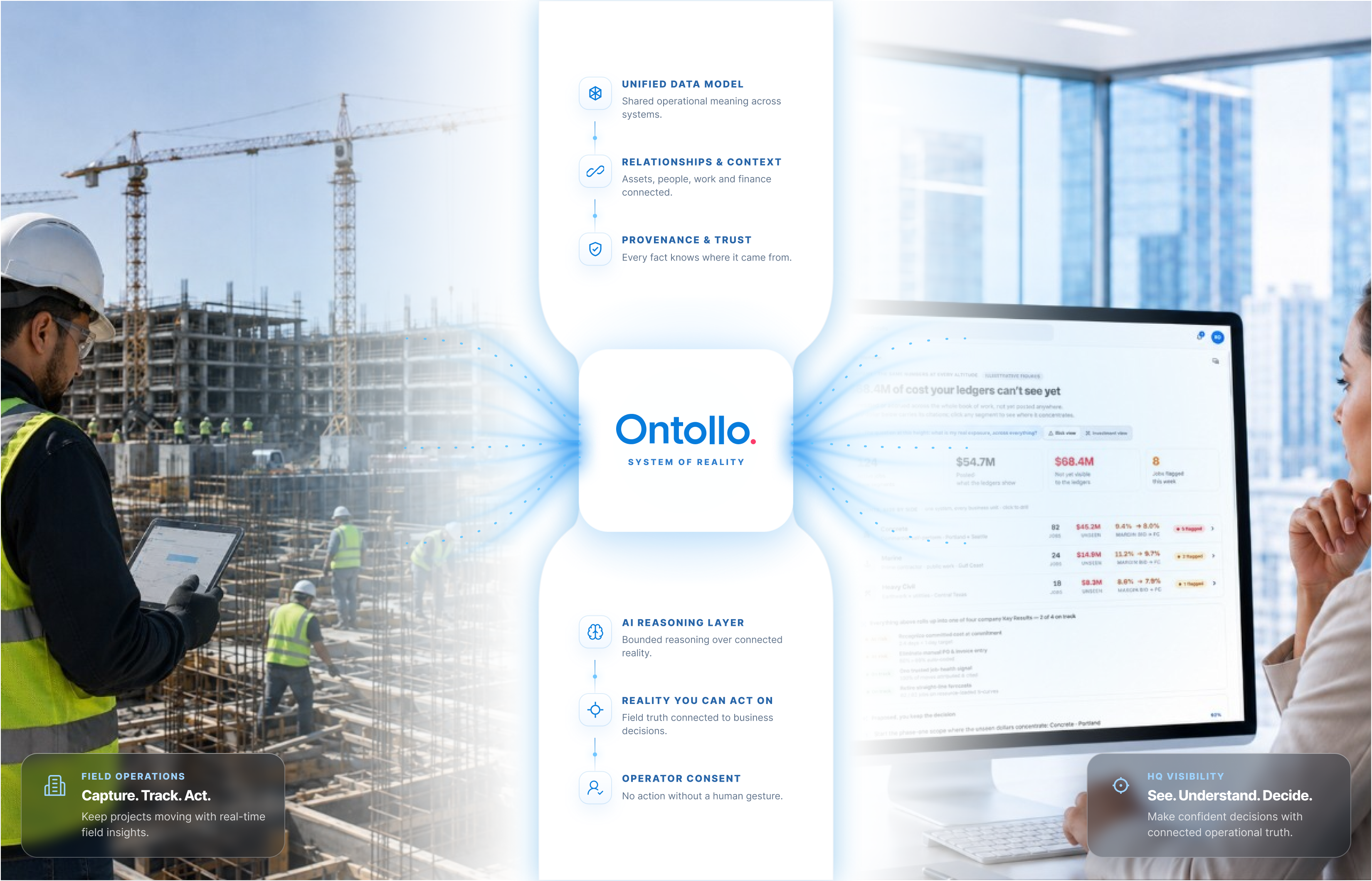
This is the work we're doing at Ontollo. We build a continuously updated operational map of your assets, people, systems and decisions that AI can reason over, across the tools you already run.
I'm curious what others saw. If you were at AU, what did you walk away thinking? And if retirements and disconnected systems are keeping you up at night, drop a comment or send me a message. I'd enjoy comparing notes.
What I love about AI transformation right now is that everyone is sharing lessons learned - not just the wins, and lately it’s all about the eye...
I left Atlassian this year to join Noah Wasmer as co-founder and CEO of Ontollo. We had built together before, infrastructure systems for F500 at...
Noah and I are excited to introduce you to Ontollo and wanted to share the story as to how we got here. Noah and I have spent our combined 40-year...